

Getting around Guatemala
Domestic air travel is limited. Regular flights operate between Guatemala City and Flores, providing the quickest route to the Petén region and the Maya site of Tikal. The flight takes approximately one hour.
TAG Airlines operates the principal domestic service. Flights to other destinations may be seasonal, irregular or available only by charter, so most journeys within Guatemala are made by road.
Road travel is the principal way to explore Guatemala. Buses, tourist shuttles, private transfers and hire cars connect Guatemala City with Antigua, Lake Atitlán, Quetzaltenango, Cobán, Río Dulce and Flores.
Distances can be deceptive because mountainous terrain, roadworks, congestion and frequent settlements slow journeys. Traffic in and around Guatemala City can add several hours to a journey, particularly during the morning and evening rush hours.
Tourist shuttles are widely used between the principal visitor destinations. They are generally more comfortable and convenient than public buses, although journey times remain dependent on traffic and road conditions.
Major highways are paved, but their condition varies. Roads linking Guatemala City with Antigua, the Pacific coast and the larger regional centres are generally in reasonable condition, although potholes, poorly marked roadworks and unlit vehicles are common.
Secondary roads may be narrow, steep or unpaved, particularly in mountainous and rural areas. Heavy rain can cause flooding, landslides and temporary closures during the wet season. Numerous unmarked speed bumps, known locally as túmulos, require particular care.
A four-wheel-drive vehicle may be useful for remote destinations, but is not normally required for travel between the principal tourist centres. Avoid driving after dark due to poor lighting, road hazards and security risks.
Guatemala's principal roads are identified by letters and numbers:
• CA routes form part of the Central American highway network. CA-1 is the Inter-American Highway, while CA-9 connects the Pacific and Caribbean coasts through Guatemala City.
• RN routes are national highways connecting departments and important towns.
• RD routes are departmental roads serving destinations within individual departments.
• Rural and local roads provide access to smaller communities and may be unpaved.
Road signs generally use Spanish place names and distances are shown in kilometres.
International and local car-hire companies operate at La Aurora International Airport, in Guatemala City, Antigua and several other tourist centres. Booking is advisable during Christmas, Easter and other busy holiday periods.
The minimum rental age is usually 21 or 25, depending on the company and vehicle category. Drivers under the company's standard age may be charged a surcharge. A credit card is normally required for the security deposit.
Check the vehicle carefully before departure and ensure that the recorded damage, spare tyre and emergency equipment are complete. Confirm whether the quoted price includes compulsory insurance, as online rates may exclude important charges.
Most rental companies do not permit vehicles to cross international borders without prior written authorisation. Travellers planning to visit remote highland areas should discuss the route and appropriate vehicle type with the rental company.
Taxis are readily available in Guatemala City and the principal tourist centres. In Guatemala City, licensed taxis are generally white and carry official identification, although colours and markings may vary elsewhere. Airport and hotel taxis can be booked from designated desks or ranks.
Some taxis use meters, but passengers should confirm that the meter will be used before setting off. Where there is no meter, agree the fare in advance. Hotels and restaurants can arrange a trusted taxi, which is preferable to hailing an unmarked vehicle in the street.
Ride-hailing services include Uber and inDrive, which operate in Guatemala City and Antigua, with more limited availability in several other urban and tourist areas.
Three-wheeled tuk-tuks provide inexpensive short-distance transport in Antigua, Flores and many smaller towns. Agree the fare before travelling if it is not displayed.
Cycling is possible, but Guatemala's steep terrain, heavy traffic, limited cycling infrastructure and inconsistent driving standards make independent long-distance touring demanding. Cyclists should avoid major highways and riding after dark.
Mountain-bike tours are available around Antigua, Lake Atitlán and parts of the western highlands. Using an experienced local operator is advisable, as routes may involve rough tracks, steep descents and remote communities. Helmets should always be worn.
Long-distance buses connect Guatemala City with most departmental capitals, meaning the administrative capitals of the country's 22 departments, as well as smaller towns. Services range from comfortable Pullman-style coaches to basic former North American school buses, commonly called chicken buses.
There is no single central coach station in Guatemala City. Centra Norte serves several routes to northern and eastern Guatemala, while Centra Sur serves routes to southern districts and the Pacific region. Many long-distance companies operate from their own private terminals elsewhere in the city, so passengers should confirm the precise departure point when buying a ticket.
First-class coaches and tourist shuttles are preferable for longer journeys. Chicken buses are inexpensive and frequent but can be overcrowded, stop repeatedly and offer little space for luggage. Keep valuables with you and avoid placing important belongings on overhead racks or roofs.
Booking is advisable on popular routes and during Christmas, Easter and national holidays. Timetables may be described by departure time rather than arrival time, as delays are common.
Traffic drives on the right and overtakes on the left. Seat belts are compulsory where fitted, and motorcyclists must wear helmets. Children should travel in a suitable restraint appropriate to their age and size.
Drivers should obey posted limits, which take precedence over general limits. Typical maximum limits are 40 to 50kph (25 to 31mph) in built-up areas and 70 to 80kph (43 to 50mph) on rural roads, with higher limits on certain major highways.
Using a handheld mobile phone while driving is prohibited. Do not drink and drive. Police checkpoints are common, and drivers should carry their documents and follow officers' instructions.
Drivers involved in an accident should not move the vehicle unless remaining in place presents an immediate danger. Contact the police, rental company and insurer and photograph the scene where it is safe to do so.
There is no single nationwide breakdown organisation offering the same level of coverage as those found in some European countries. Travellers using a hire car should contact the rental company first and keep its emergency number readily available.
PROVIAL, Guatemala's road-safety and highway-assistance service, can be contacted on 1520 for incidents on principal roads. Tourist assistance is available through ASISTUR on 1500 or +502 2290 2810 (24/7 in Spanish and English). Police can be reached on 110, while fire and ambulance services can be reached on 122 or 123.
Mobile reception may be unreliable in remote areas. Carry drinking water, a charged telephone and sufficient fuel, and avoid attempting repairs beside a busy or isolated road after dark.
Drivers must carry a valid driving licence, passport, vehicle registration documents and proof of insurance. Visitors may generally use a valid foreign driving licence for up to three months. An International Driving Permit is advisable, particularly if the original licence is not written in Spanish or does not use the Roman alphabet.
Drivers of hire cars should also carry the rental agreement and the company's emergency contact details. Written permission is required if the vehicle belongs to someone else.
Guatemala City's Transmetro system uses dedicated bus lanes along several principal corridors and is generally easier for visitors to use than ordinary city buses. Payment is made electronically using a bank card or rechargeable transport card. Routes do not cover the entire city, so taxis and ride-hailing services are often more convenient.
Traffic congestion is severe, particularly during weekday rush hours. Allow generous time when travelling to the airport or between different zones of the capital.
Antigua's historic centre is compact and best explored on foot, although cobbled streets can be uneven. Tuk-tuks and taxis handle longer journeys. In other towns, local buses, minibuses, shared vans and tuk-tuks provide inexpensive transport, but routes and stops are not always clearly marked.
Visitors should avoid poorly lit bus stops and nearly empty public buses after dark. Ask accommodation staff for advice on suitable routes or arrange a taxi.
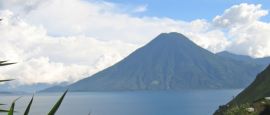
Public motorboats, known as lanchas, are an important form of local transport on Lake Atitlán. Frequent services depart from Panajachel for lakeside communities including Santa Cruz La Laguna, Jaibalito, Tzununá, San Marcos La Laguna, San Juan La Laguna and San Pedro La Laguna. Separate boats serve Santiago Atitlán and other destinations.
Fares may differ according to the destination and are usually paid in cash. Confirm the price before boarding, keep luggage protected from spray and avoid travelling in poor weather. The lake can become rough later in the day, so morning journeys are generally more comfortable.
On the Caribbean side, boats connect Puerto Barrios with Lívingston, which has no road access. Boats also travel between Lívingston and Río Dulce through the Río Dulce gorge. Services are normally arranged at the public docks, but departure times and fares should be confirmed locally.
Do you have any Feedback about this page?
© 2026 Columbus Travel Media Ltd. All rights reserved. No part of this site may be reproduced without our written permission, click here for information on Columbus Content Solutions.



 You know where