
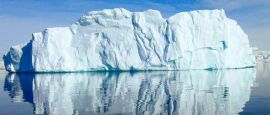
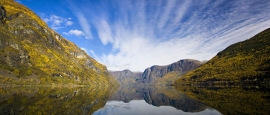


The Antarctic Peninsula is the focus of most visitor itineraries, combining steep mountains, glaciers, ice-filled channels and abundant wildlife. Expedition ships explore both sides of the peninsula and its offshore islands, with landings determined by weather, sea ice and wildlife conditions. Gentoo, chinstrap and Adélie penguins, seals and several species of whale may be encountered during the summer season.
Book and Go

Latest features
Antarctica things to see and do
Antarctic Peninsula
Antarctic wildlife
Wildlife is one of Antarctica's principal attractions. Penguins gather in large breeding colonies along ice-free sections of the coast, while Weddell, crabeater, leopard and Antarctic fur seals occur around the continent and its islands. Humpback, minke and killer whales are among the cetaceans encountered in Antarctic waters. Wildlife sightings vary with location and season, and visitors must maintain the distances specified by guides and site regulations.
Cuverville Island
Set in the Errera Channel, Cuverville Island is known for its large gentoo penguin colonies and mountainous surroundings. Visitors land on a broad cobble beach, while icebergs frequently gather in the waters offshore. Parts of the island are closed to protect penguin access routes and breeding areas.
Deception Island
This active volcanic island in the South Shetland Islands forms a flooded caldera entered through the narrow channel known as Neptune's Bellows. At Whalers Bay, the remains of a former whaling station provide evidence of Antarctica's industrial past, while black volcanic beaches and steaming ground reveal the island's continuing geothermal activity.
Half Moon Island
This crescent-shaped island in the South Shetlands lies beneath the mountains of nearby Livingston Island. Chinstrap penguins breed among its rocky outcrops, alongside nesting seabirds, while the surrounding bays offer broad views across the glaciers and peaks of the archipelago.
Lemaire Channel
Enclosed by steep mountains and glaciers, the narrow Lemaire Channel is one of the Antarctic Peninsula's most dramatic waterways. Expedition vessels pass between Booth Island and the mainland when ice conditions permit, with towering cliffs reflected in exceptionally calm conditions and icebergs frequently filling the channel.
Neko Harbour
Neko Harbour is one of the relatively few commonly visited sites where passengers can set foot on the Antarctic mainland rather than an offshore island. The sheltered bay is surrounded by glaciers and mountains and supports breeding gentoo penguins. Glacial calving can produce unexpectedly large waves, so visitors must follow expedition staff instructions closely when ashore.
Paradise Bay
Mountains and glaciers surround this deep bay on the western side of the Antarctic Peninsula, creating one of the region's most striking natural harbours. Visits typically combine small-boat cruising among icebergs with views of glaciers descending directly to the sea, while seals, penguins and whales may be seen in the surrounding waters.
Petermann Island
South of the Lemaire Channel, Petermann Island supports colonies of gentoo and Adélie penguins as well as nesting seabirds. Walking routes lead across rocky terrain to viewpoints over surrounding channels, mountains and ice, although several areas are closed or restricted to protect breeding wildlife.
Port Lockroy
Established as a British base during the Second World War, Port Lockroy on Goudier Island is now preserved as a historic site and museum. Its restored buildings illustrate life at an early Antarctic research station, while the island is also home to a large gentoo penguin colony.
Ross Island
Ross Island is closely associated with the heroic age of Antarctic exploration. Historic huts at Cape Evans and Cape Royds preserve links with Robert Falcon Scott and Ernest Shackleton, while Mount Erebus, the world's southernmost active volcano, dominates the island. Access is limited and the region is visited by far fewer expedition voyages than the Antarctic Peninsula.
South Pole
At 90°S, the geographic South Pole lies deep in the Antarctic interior at an elevation of approximately 2,835m (9,300ft). The nearby Amundsen-Scott South Pole Station is a major scientific research facility. Reaching the pole requires a specialist fly-in expedition and is entirely separate from conventional Antarctic Peninsula cruises.
Do you have any Feedback about this page?
© 2026 Columbus Travel Media Ltd. All rights reserved. No part of this site may be reproduced without our written permission, click here for information on Columbus Content Solutions.



 You know where